Muscle first
Why strength training matters on a GLP-1
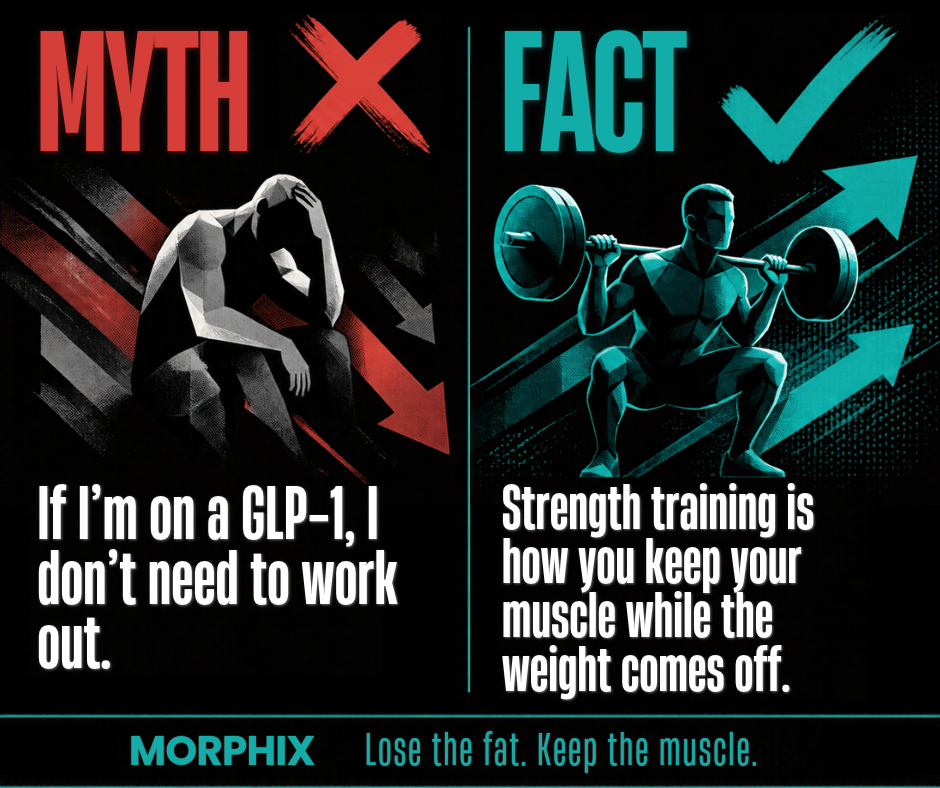
Most people start a GLP-1 with one goal: lose weight. That is a good goal. But the number on the scale does not tell you what you lost. And on a GLP-1, a real share of it can be muscle.
The weight that comes off is not all fat
In major clinical trials of these medications, roughly a quarter to two-fifths of the weight people lost was lean mass, not fat. Lean mass includes the muscle that keeps you strong, steady on your feet and burning energy.
Why losing muscle hurts
- You get weaker. Carrying groceries, climbing stairs and getting off the floor get harder.
- Your metabolism slows. Muscle uses energy even at rest. Less muscle means you burn less.
- Weight comes back faster. If you stop the medication with less muscle, regaining fat gets easier.
Strength training is the signal to keep it
The same 2025 medical advisory that raised protein targets called resistance training essential during GLP-1 treatment, and noted that protein alone likely is not enough to protect muscle without it. Lifting tells your body: we still need this muscle.
What to do
- Lift 2 to 4 days a week. Full-body sessions of 35 to 50 minutes are plenty.
- Cover the big moves: squat, hinge, push, pull, carry and core.
- Leave 2 to 3 reps in the tank. You do not need to train to exhaustion, especially early on.
- Add a little each week: a rep, a set or a few pounds. That progression is what keeps muscle.
- Go easier after a dose increase. Side effects often spike for a few days, so cut back, do not quit.
Lose the right weight
Your medication can take the weight off. Strength training and protein decide whether it is fat or muscle, and whether it stays off. That is the whole idea behind Morphix: lose the fat, keep the muscle, keep the results.
New to lifting? Start with our protein guide, then book a free consult and we will build a plan around you.
Sources: summary of the 2025 Joint Advisory (ACLM, ASN, OMA, TOS) and STEP 1 / SURMOUNT-1 body-composition results. This article is general education, not medical advice. Talk with your doctor before starting a new exercise program.